
By Erin Black, Senior Consultant, Strategy + Business Operations
Raising children is hard. It is incredibly rewarding. It is exhausting. It is fun. It is frustrating. And, it’s been made even more complex with COVID. I know: I have one son diagnosed with depression and anxiety and one son diagnosed with ADHD, both of whom I home-schooled last year when they never went back after Spring Break; and two (foster) sons, both born with drugs in their system. Amidst all of the challenges of rearing children, addressing mental health concerns – like physical health concerns – can be scary, confounding, and complicated. Understanding the facts and some of the available resources is a good place to start when you are trying to understand or determine if there is a mental health condition in a child that needs professional attention. Mental health and physical health are closely related, so it is very important to address both.
There are many dimensions of mental health and the possible sources of a mental health disorder. Many of them neither parents nor children control: just like a physical condition affects the body, mental conditions are due to physiological problems in the brain, for example a chemical imbalance. This is no one’s fault. At the other end of the spectrum, there are things that can be controlled and even prevented which can stop a trauma, that could result in a mental illness, before it even starts.
Adverse Childhood Experiences (ACEs)
Adverse Childhood Experiences are potentially traumatic events that occur in childhood. ACEs can include violence, abuse, and growing up in a family with mental health or substance use conditions. Toxic stress from ACEs can change brain development and affect how the body responds to stress. ACEs are linked to chronic health problems, mental illness, and substance misuse in adulthood1. ACEs are ten subgroups divided into three categories.
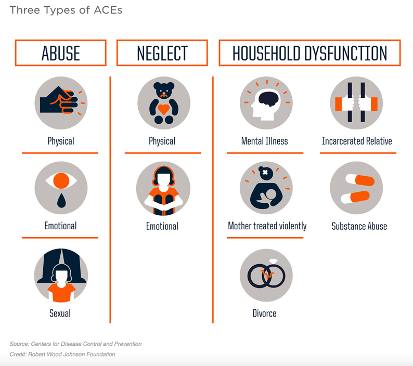
Why is this so important? If we want to raise kids in the healthiest environment so that they can have the best chances at a happy and healthy life, then we need to educate people on what the ACEs are and the effects they have. Preventing ACEs could reduce the number of adults with depression by 44%; that’s up to 21 million cases of depression. It could also reduce up to 1.9 million cases of heart disease and 2.5 million cases of obesity1. Here are some of the negative effects of the ACEs.
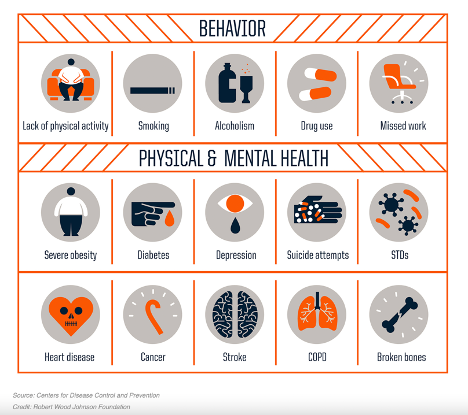
To learn more about the ACEs visit the Centers for Disease Control and Prevention (CDC) or take an ACEs quiz such as this. Most of all, if you think a child is suffering, seek professional help.
Statistics on Children and Mental Health
The CDC reports2 that mental disorders among children are described as serious changes in the way children typically learn, behave, or handle their emotions, causing distress and problems getting through the day. Among the more common mental disorders that can be diagnosed in childhood are attention-deficit/hyperactivity disorder (ADHD), anxiety, and behavior disorders.
Here are a few statistics2:
- ADHD, behavior problems, anxiety, and depression are the most commonly diagnosed mental disorders in children, affecting a total of approximately 17 million children.
- Some of these conditions commonly occur together. For example, having another disorder is most common in children with depression (74%)
- Treatment rates differ among mental disorders ranging from 78% to 54%.
- Diagnosed mental, behavioral, and developmental disorders begin in early childhood: 17% of children are between 2-8 years of age.
- Rates of mental disorders change with age: depression and anxiety are more common with increased age while behavior problems are more common among children ages 6-11 years.
So, what about COVID?
There is a plethora of information on COVID and the mental health of children, and sufficient data worldwide to support an increase in mental health concerns. One study with over 51,000 participants found that duration rather than intensity of loneliness was more strongly associated with mental health symptoms. These researchers suggest that loneliness for youth during the disease containment measures may affect the future mental health of youth and recommend early intervention3.
Help for Caregivers
As a caregiver, what do you do with all of this information? How do you help your child or any child that you care for? Or how do you support a caregiver? Do you know the warning signs or red flags to look for like4,5: problems in more than one setting (home and school), returning to behaviors more common to younger children like bedwetting, signs of self-destructive behavior like cutting, social withdrawal, having intense worries or fears that cause problems in relationships, getting in fights, or feeling very sad/signs of being upset (tearfulness) for more than two weeks?
1. Get educated. Remember that old ad campaign, “The More You Know”? Well, it’s true. The more you know, the better prepared you are. The Substance Abuse and Mental Health Services Administration (SAMHSA) has put out a very good infopaper about talking with children, specifically as it relates to caregivers, parents, and teachers during an infectious outbreak. SAMHSA also has a number of other good resources on their website. The National Alliance on Mental Illness (NAMI) also has information on learning to help your child and your family.
2. Get connected. It’s important to remember that you are not alone. There are millions of other families out there supporting children who have a mental health condition. NAMI is a great place to start getting connected and asking questions. They have a lot of wonderful resources and chapters throughout the U.S. Find your local chapter here. Call a friend and connect to people who are important to you. If you’re a person of faith, connect to your place of worship and maybe join a small group that can help to support you.
3. Get pampered. You’ve got to take care of yourself. I know it sounds impossible. You don’t have to spend a day at the spa or on the links but get outside. The Harvard Medical School recently published an article stating that research in a growing scientific field called ecotherapy has shown a strong connection between time spent in nature and reduced stress, anxiety, and depression. Dr. Nate Sowa, MD, PhD recommends you go for a walk, outside if at all possible! Spend a few minutes reading a book (guess where?…outside!). Don’t forget to eat well and drink plenty of water; it’s important to keep your own energy levels up.
4. Get comfortable…talking about mental health. If you are the caregiver or you know one, talk about it no differently than physical health. There is nothing to be ashamed of. It’s not your fault. (It’s not the child’s either.) Understanding the stigma will go a long way to reducing it. If you love a caregiver, invite them out like you would any other family member or friend. Ask them how their child is doing and listen to them. Learn about the mental health condition and ask if you can help in any way. Drop a meal by or some flowers. Mow the lawn. Offer to go shopping for or with them.
5. Get help and learn from experts. In addition to NAMI, Mental Health America has parent and other support groups. You can also connect to a local affiliate. Don’t feel like you have to do it all yourself. Know what to look for and don’t be afraid to ask for help. Mentalhealth.gov’s website has information on what to look for and what to do. If you or your child needs immediate help, call 911. If someone is experiencing emotional distress, call the National Suicide Prevention Lifeline at 1-800-273-TALK (8255) or chat live online. You can also reach out to the SAMHSA Treatment Referral Helpline at 1-877-726-4727 to get general information on mental health and locate treatment services in your area.
_____________________________________________
References
- CDC VitalSigns fact sheet – https://www.cdc.gov/vitalsigns/aces/pdf/vs-1105-aces-H.pdf
- CDC website on Children’s Mental Health – https://www.cdc.gov/childrensmentalhealth/data.html
- Psychiatric Times, New Findings About Children’s Mental Health During COVID-19 – https://www.psychiatrictimes.com/view/new-findings-children-mental-health-covid-19
- US National Library of Medicine – https://medlineplus.gov/childmentalhealth.html